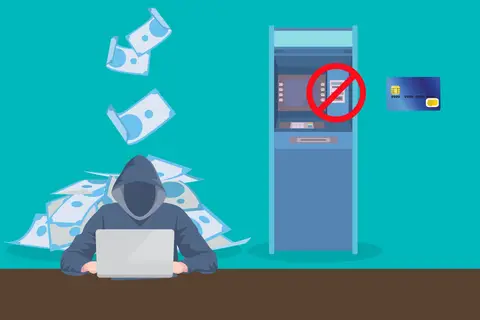
Selling crypto in Saudi Arabia means one of four things: a P2P sale where another person pays you in riyals, a withdrawal from a Gulf-licensed exchange to your bank, an OTC trade for a large sum, or a sale on a card-funded platform that pays you in dollars rather than riyals. "Selling for cash" in the literal sense, handing coins to a stranger for banknotes, is the fifth option people search for, and it is the one we tell you not to do. No licensed cash desk or Bitcoin ATM exists in the Kingdom, and a meet-up has no escrowEscrowA holding account controlled by a platform, not by either trader. The crypto stays locked until the seller confirms payment or an arbitrator decides., no record and no legal protection.
The framing you need before any route: crypto is not prohibited for individuals here, but it is unregulated. No exchange holds a Saudi licence, SAMA-supervised banks and payment apps do not offer crypto services, and the 2018 Standing Committee statement says nobody is licensed to deal in virtual currencies. When you cash out, you are moving money from an unregulated world into a regulated one, and that is why the bank-side questions near the end of this page matter.
The four real routes, with fees and timelines
| Route | You receive | Cost | Time to riyals | Best for |
|---|---|---|---|---|
| P2P sell (Binance, Bybit, OKX, Bitget) | SAR to your own STC Pay, urpay or bank account | Binance: 0.05 USDT taker fee if you accept a buy ad (published); buyer pays slightly above 3.75, which works in your favour | Minutes with STC Pay or urpay; same day by bank transfer (reported) | SAR 200 to a few tens of thousands, speed |
| Gulf-licensed exchange (CoinMENA) | SAR bank transfer to an account in your name | 0.75% trading + SAR 117.5 withdrawal, minimum SAR 500 (published) | 1–2 working days for local transfers (published) | Mid-size sums, a licensed counterparty, a clean bank record |
| OTC desk | SAR via a Gulf-licensed platform's bank rail, or USD by SWIFT | Negotiated spread; CoinMENA OTC from USD 50,000 with 0–0.2% processing (published); Kraken from USD 50,000 | Same day to several days | USD 50,000 and above, companies, one agreed price |
| Card-funded exchange (CEX.IO) | USD or EUR, not riyals; your bank converts | Platform withdrawal fee plus your bank's FX margin | Depends on the card issuer | Small balances already on the platform |
| Cash meet-up | Banknotes, if the other party is honest | Unverifiable; no escrow, no recourse | Not recommended | Nobody |
Route 1: P2P sell to STC Pay or a bank account
This is the fastest route and the one most Saudi residents use. You move USDT to the exchange, open the P2P tab, and either post a sell ad (you are the makerMaker / takerThe maker posts an ad and sets the price; the taker accepts an existing ad. Fees differ for each side.) or accept a buyer's ad (you are the taker). The platform locks your USDT in escrow. The buyer sends riyals to the STC Pay, urpay or bank account you registered, you open your own banking app, confirm the exact amount from a sender whose name matches the buyer's verified name, and release. Binance's own guide puts it bluntly: release only after confirming the funds arrived, check the buyer's completion rate, keep two-factor authentication on, and download your order history.
Costs are small. Binance charges takers a flat 0.05 USDT per order on USDT pairs in the SAR market; as a seller you benefit from the premiumPremiumThe amount by which P2P prices sit above the 3.75 riyal-per-dollar peg. Buyers pay it; sellers receive it. buyers pay above 3.75. Bybit P2P is reported as fee-free. On the payment side, urpay and Liv. KSA are the officially announced Binance SAR methods (29 April 2022); STC Pay, Al Rajhi, SNB and Alinma appear on ads per test reports. The P2P hub has the platform table and the full scam catalogue; the sell-side scams that matter most are fake payment screenshots, third-party payments and triangulation fraud, where a stranger's stolen money lands in your account.
- Send USDT to the exchange
From your wallet, use TRC-20 for the cheapest transfer. Double-check the deposit address and network; a wrong network is not recoverable.
- Register the payout account in your name
STC Pay for speed, or the bank account whose Latin-script name matches your exchange profile exactly.
- Accept a buy ad from a high-completion buyer
Look for hundreds of orders and 95%+ completion. Read the ad terms; some buyers only pay through specific banks.
- Wait for the money in your own app
Not a screenshot, not an SMS. The balance in your STC Pay or bank app, from a sender whose name is the buyer.
- Release, then save the record
Release the escrow, then export the order details. You may need them if your bank asks about the inbound transfer.
Route 2: SAR withdrawal from a Gulf-licensed exchange
If you prefer a company that is licensed somewhere, even if not in Saudi Arabia, this is the route. CoinMENA, licensed by the Central Bank of Bahrain and Dubai's VARA, lists SAR among its local currencies and publishes its riyal prices: 0.75% trading fee on the sale, then a SAR withdrawal fee of SAR 117.5 with a minimum of SAR 500, to a bank account in your own name, with local transfers taking one to two working days. On SAR 1,000 that fee is 11.75% and makes no sense; on SAR 20,000 it is under 0.6% plus trading, which is competitive with P2P and comes with a bank transfer from a licensed company rather than from a stranger. Our CoinMENA review has the account set-up.
Two caveats. BitOasis names Saudi Arabia and SAR in its official App Store listing, but its current SAR withdrawal instructions are not something we could verify on its site. Rain is licensed in Bahrain and advertises OTC, but SAR deposits and withdrawals are not documented on Rain's own pages at all; a third-party report mentions a SAR 50 withdrawal fee, and we do not publish it as fact. Licensed in Bahrain or Dubai does not mean licensed in Saudi Arabia, and none of these platforms gives you SAMA or CMA protection.
Route 3: OTC for large sums
From roughly USD 50,000 upwards, P2P stops making sense: you would be splitting the sale across many buyers, each one a separate counterparty risk, and your bank would see a burst of inbound transfers. An OTCOTCOver the counter: a private trade with a desk at one agreed price, instead of many small orders on a public order book. desk quotes a single price for the whole amount. CoinMENA offers OTC from USD 50,000 with a 0–0.2% processing fee and can settle in SAR through its bank rail; Kraken's desk starts above USD 50,000 and settles within 24 hours to your Kraken account, bank or wallet, but in USD and "in certain jurisdictions" it does not list; Binance OTC starts at USD 200,000. Every desk will ask for source-of-funds evidence before paying out. The OTC page compares the desks and explains the RFQ process.
Need the opposite direction?Buying with a Saudi card takes minutes in US dollars at a published fee range. Selling later goes back to the card in USD or EUR.
Create an accountRoute 4: card-funded exchanges pay in dollars, not riyals
If you bought on CEX.IO or through the card on-ramp of Bybit or OKX, remember that those platforms never held riyals. CEX.IO's payment-methods article lists cards, Apple Pay and Google Pay, and bank rails for Europe, the UK and the US, all in USD or EUR; there is no SAR option in either direction. A sale there leaves you with dollars on the platform, and whatever withdrawal method you use, your Saudi bank converts at its own rate with its usual foreign-currency margin. For a few hundred dollars that is fine. For anything larger, the cheaper path is to withdraw USDT from the card platform to the P2P exchange or to CoinMENA and sell for riyals there; a TRC-20 transfer costs a dollar or so and takes minutes.
Cash meet-ups: why we say no
"Sell USDT cash Riyadh" and "بيع USDT كاش" are real searches, and real classified ads exist offering riyals for USDT at a fee. Everything about that market is unverifiable. There is no licensed cash exchanger for crypto in the Kingdom; SAMA-supervised money changers are licensed for currencies, not virtual assets, and SAMA has suspended exchange houses for other violations before, so any desk doing this is operating outside its licence. A meet-up has no escrow: whoever hands over first is trusting the other side completely, and if something goes wrong there is no arbitrator, no order history and no regulator to call. The 2018 Standing Committee statement and the 2019 Ministry of Finance warning both describe the risk in their own words: fictitious contracts and transfers to unknown parties.
What your bank may ask, and how to answer
The sell side is where the regulated system notices you. A domestic transfer between two individuals is an ordinary payment, and test reports say such transfers clear without comment. A pattern of inbound transfers from different individuals, or a single large payment from a Bahrain-licensed exchange, is the kind of thing a bank's AMLAML (anti-money laundering)The compliance rules under which banks monitor transactions and may ask customers to explain the source of funds. Saudi Arabia has been a full FATF member since June 2019. team may review. We found no documented Saudi case of an account frozen over P2P, and we are not going to invent one, but the generic procedure exists everywhere: a call or secure message asking about the source of the funds, sometimes a temporary hold until you answer.
The answer that works is a boring, documented one. "I sold digital assets I bought in [month] on [platform]; here is the purchase record, here is the sale order, here is the wallet transfer in between." Keep order histories exported from the exchange, screenshots of each sale, and the original purchase receipts. Keep volumes consistent with your account's normal activity rather than cashing out a year of holdings in one afternoon. Never let anyone else's money pass through your account, and never accept a P2P payment from a sender who is not the buyer. If your bank does ask, answering promptly with records is almost always the end of it.
Records and tax
Tax is the easy part. Saudi Arabia has no personal income tax and no capital-gains tax for individuals, and ZATCA has published no crypto-specific guidance, so a resident selling USDT at a gain files nothing. Zakat is a separate religious obligation; whether and how it applies to crypto holdings is a scholarly question rather than a ZATCA rule, and we leave the ruling to scholars. Companies are different: corporate income tax on foreign-owned shares, 15% VAT and Zakat filings all apply to businesses, and a company trading crypto needs an accountant. The tax and Zakat page lays it out.
Even with no tax to file, keep the records anyway. They are what you show the bank, what you need for an exchange appeal, and what you will want if the Kingdom's announced stablecoin framework turns into rules that ask about past holdings. A simple spreadsheet with date, platform, amount, price in SAR and the order ID, plus the exported order histories, is enough. If you are an expat who will eventually leave Saudi Arabia, those same records may be what your next country's tax office asks for; our Iqama and KYC guide touches on account closure before departure. And if you ever searched for a cash machine instead of all this, the Bitcoin ATM page explains why there are none and what to do in Riyadh, Jeddah and Dammam instead.
Frequently asked questions
What is the fastest way to sell USDT for riyals in Saudi Arabia?
P2P on Binance or Bybit with STC Pay or urpay as the payment method. You post or accept a buy ad, the buyer sends riyals to your wallet, you confirm in your own app and release the USDT from escrow. The riyals typically arrive within minutes during banking hours. Bank transfer works the same way but can take longer to show.
Can I sell crypto for cash in Riyadh or Jeddah?
There is no licensed cash desk, Bitcoin ATM or exchange office for crypto anywhere in the Kingdom. Cash meet-ups arranged through classifieds or chat groups have no escrow and no legal protection, and the 2018 Standing Committee warning about transfers to unknown parties describes the risk exactly. Sell to your own bank or STC Pay account instead and withdraw cash from there.
How much does CoinMENA charge to withdraw riyals?
CoinMENA publishes a SAR withdrawal fee of SAR 117.5 with a minimum withdrawal of SAR 500, plus a 0.75% trading fee when you sell. Local transfers take one to two working days according to its support pages. It is the only Gulf-licensed platform that prints its SAR prices, which is why it is the benchmark here.
Can I withdraw riyals from CEX.IO, Binance or Bybit to my Saudi bank?
No. CEX.IO works in US dollars and euros; its payment-methods article lists cards, Apple Pay and bank rails but no SAR. Binance, Bybit, OKX and Bitget have no riyal withdrawal either; their SAR route is the P2P marketplace, where another user pays you. Only Gulf-licensed platforms such as CoinMENA run a direct SAR bank withdrawal.
Will my bank ask where the money came from?
It may. Saudi banks run AML reviews on unusual inbound transfers, and a series of P2P payments from different individuals is unusual by definition. We found no documented Saudi case of an account frozen for P2P, but keep your exchange order history, screenshots and the original purchase records so you can explain any transfer. Keep volumes in line with your normal account activity.
Do I pay tax when I sell crypto in Saudi Arabia?
There is no personal income tax or capital-gains tax for individuals in Saudi Arabia, and ZATCA has issued no crypto-specific guidance. Zakat is a separate religious question that scholars treat case by case. Businesses are different: corporate tax and VAT rules apply to companies. Our tax and Zakat page goes into the detail.
How long does it take to turn USDT into riyals in my account?
P2P with STC Pay or urpay: minutes once the buyer pays. P2P with bank transfer: same day in most reports. CoinMENA SAR withdrawal: one to two working days for local transfers. OTC: same day to several days depending on the desk and the bank. Add the time it takes to move coins from a wallet to the exchange, usually minutes on TRC-20.
Sources and references
- Binance Square — P2P guide: release only after confirming funds, keep order-history reports
- Binance — flat 0.05 USDT taker fee on USDT pairs in selected fiat markets incl. SAR
- CoinMENA — fee schedule: SAR withdrawal SAR 117.5, minimum SAR 500, trading 0.75%
- CoinMENA — funding via bank: local 1–2 working days, personal accounts only
- CEX.IO — payment methods (USD/EUR rails, cards, Apple Pay)
- Kraken — OTC desk: trades above USD 50,000, settlement within 24 hours
- Saudi Central Bank — Standing Committee warning on virtual currencies (12 Aug 2018)
- Saudi Central Bank — Ministry of Finance warning on virtual currencies (21 Aug 2019)
- Zamakhchary & Co — crypto platforms and fiat rails in Saudi Arabia (Mondaq, Feb 2026)
Ready for your first coin?
Sign-up and the ID check take a few minutes. Then buy Bitcoin, USDT or Pi with a Visa or Mastercard, or with Apple Pay.
Global platform operating since 2013 · registered with FinCEN (US) and the FCA (UK). Check availability in your country before signing up.