If you searched "Bitcoin ATM Riyadh" or "crypto ATM Jeddah", here is the answer before anything else: there are no verified Bitcoin ATMs in Saudi Arabia, in any city, and no licensed operator exists to install one. The two machines that an ATM directory once listed, in Jeddah and Jubail, were checked in person in 2019 and were not there. Nothing has opened since. What you can do instead takes about the same ten minutes and is explained below.
There are no verified Bitcoin ATMs in Saudi Arabia. The last listings, in Jeddah and Jubail, were found not to exist in June 2019, and no operator has announced a machine since.
We would rather publish a short, true page than a long list of imaginary addresses. Several sites still show a count for Saudi Arabia copied from a directory that cannot be checked by automated tools, and one regional article in 2022 still counted "one in Jeddah" without evidence. Until someone photographs a working machine, the Kingdom is a zero-ATM market.
The straight answer
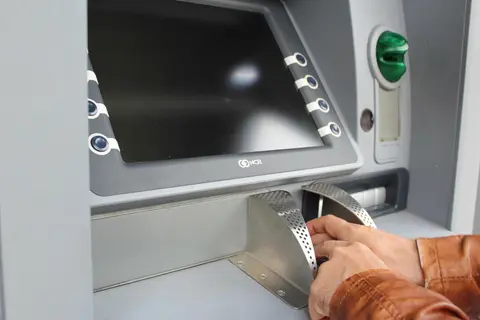
A Bitcoin ATMBitcoin ATMA kiosk that sells (and sometimes buys) Bitcoin for cash. You scan a wallet QR code, insert notes, and the machine sends coins to your address. Operators need banking and, in most countries, a money-services licence. needs three things to exist: an operator with a permit, a bank willing to hold the operator's cash, and a legal way to sell crypto to the public. Saudi Arabia has none of the three. Crypto is not prohibited for individuals, but it is unregulated, no exchange holds a Saudi licence, and the Standing Committee statement of August 2018 is explicit that no party is licensed to deal in virtual currencies inside the Kingdom. That is why the question is not "where is the nearest ATM" but "which online route replaces it", and the answer for most people is P2P with STC Pay or a bank transfer.
The 2019 ghost machines
The one sourced fact about Bitcoin ATMs in Saudi Arabia is a negative one. In June 2019 the regional outlet Unlock Blockchain reported that Coin ATM Radar, the directory most "ATM near me" results draw from, listed two machines in the Kingdom, one in Jeddah and one in Jubail. Its reporter checked both locations and found no Bitcoin ATM at either. The same report noted that the only working machine in the whole Gulf at the time was in Bahrain. The Jeddah and Jubail pins have lived on in copied articles and aggregator maps ever since, which is why the search still exists seven years later.
- Aug 2018
The Standing Committee (chaired by the CMA, with SAMA as a member) states that virtual currencies are not approved and nobody is licensed to deal in them.
- Jun 2019
Unlock Blockchain visits the two directory-listed ATMs in Jeddah and Jubail; neither exists. Bahrain hosts the only machine in the GCC.
- Aug 2019
The Ministry of Finance warns against dealing in virtual currencies and against anyone using the Kingdom's name, currency or emblem to market tokens.
- 2019 to today
No report of a Bitcoin ATM opening anywhere in Saudi Arabia; no licensing regime for operators; the practical market moves entirely online.
Why there are none
Start with the permit. The 2018 statement means there is no authority an ATM operator could apply to, and a 2026 law-firm analysis puts it plainly: no party is licensed domestically to conduct retail crypto intermediation, and a retail framework has yet to be published. Then the bank: SAMA-supervised banks and payment service providers do not offer onshore crypto exchange or payment functionality, so an operator would have no account to deposit the banknotes into and no way to settle. Finally the cash rules. Money changers in the Kingdom are SAMA-licensed for currencies, and SAMA has suspended exchange houses for violations before; a desk swapping riyals for Bitcoin would be acting outside any licence it holds. Put those together and the absence of ATMs is not a gap in the market waiting to be filled. It is the system working as designed.
What people in Riyadh, Jeddah and Dammam do instead
Three routes replace the machine, and all three work from any city with a phone and a bank account.
P2PP2PPeer-to-peer: you buy from another user on the exchange and pay them in riyals; the exchange holds the crypto until the seller confirms. with STC Pay, urpay or a bank transfer. On Binance, Bybit, OKX or Bitget you pay another user in riyals and the exchange holds the USDT in escrowEscrowA holding account controlled by the exchange. The seller's coins stay locked until they confirm your riyal payment or an arbitrator decides. until the seller confirms. urpay and Liv. KSA are the officially announced Binance SAR methods; STC Pay and bank transfers appear in test reports. Sellers price a little above the 3.75 peg; Binance charges a flat 0.05 USDT taker fee per order on USDT pairs. If you have cash in hand, deposit it into your own bank or STC Pay account first, then buy. The STC Pay guide walks through it.
A card purchase on an international exchange. The nearest thing to the ATM experience, and the simplest on-rampOn-rampAny service that turns ordinary money (riyals, dollars, a card payment) into crypto. The reverse, crypto back to money, is an off-ramp.: a Saudi Visa, Mastercard or Apple Pay buys Bitcoin in US dollars in minutes on a platform such as CEX.IO (operating since 2013; Saudi users are served by its CEX OVRS LLC entity, and no exchange is licensed in Saudi Arabia). Published card fees of 0.49%–4.99% plus a service charge, minimum 20 USD. Test reports say mada-only debit cards are often declined while Apple Pay and credit cards go through; the card page has the details.
A Gulf-licensed exchange with a riyal bank rail. CoinMENA, licensed in Bahrain and Dubai, publishes SAR fees: 0% bank deposit with a SAR 37.5 minimum, 0.75% trading, SAR 117.5 withdrawal. It is licensed somewhere, which an ATM operator here never could be, though not in the Kingdom. The exchange comparison puts all three routes side by side.
Ten minutes, no machineOpen an account, verify your ID, and buy Bitcoin with the card in your wallet. Keep only what you trade on any exchange; move the rest to a wallet you control.
Buy BitcoinHow Bitcoin ATMs work where they exist
For readers who travel: in countries that license them, a Bitcoin ATM is a kiosk, usually in a shop or mall. You open a wallet app, show the machine your receiving address as a QR code, feed in banknotes, confirm, and the Bitcoin arrives at your address within minutes once the network confirms it. Above a small amount the machine asks for a phone number or an ID scan, because operators are money-services businesses with their own KYCKYCKnow your customer: the identity check a financial business runs before serving you, usually an ID document and sometimes a selfie. duties. Two-way machines also buy coins: you send Bitcoin to the address they display and collect cash after confirmation. The convenience is paid for in fees that are typically several times what an online exchange charges, and in the spreadSpreadThe gap between the price a seller quotes and the market price. On ATMs it is often several percent on top of the visible fee. between the machine's price and the market. In 2019 the only machine in the Gulf was in Bahrain; whether and where machines operate in neighbouring countries today is something to check locally rather than assume, and nothing about them changes the Saudi picture.
If you see an ad for a crypto ATM or cash exchange office
City by city: what actually exists
The honest answer is the same in every city, but the local context differs, and each city page below goes deeper into banks, events and the expat mix.
Riyadh. No Bitcoin ATM, no licensed cash desk. The capital has 7.0 million residents, the Kingdom's fintech district at KAFD, and the only datable crypto event calendar in the country (LEAP and Money20/20 Middle East both run at the Riyadh Exhibition and Convention Centre). Rumours about USDT dealers in the Batha gold souk have no source and should be treated as a warning against street cash deals. Residents buy online through P2P, cards or Gulf platforms; the Riyadh page covers the practical workflow.
Jeddah. No Bitcoin ATM; this is the city with the "ghost machine" from the 2019 report. With 3.75 million residents, a large Filipino and Pakistani workforce and 67 consulates, Jeddah's crypto questions are mostly about remittances and P2P. Jeddah Fintech Week, held each year, is the one recurring Saudi event whose programme names crypto and Web3 explicitly. See the Jeddah page.
Dammam, Al Khobar and Jubail. No Bitcoin ATM; the other 2019 phantom listing was in Jubail. The Eastern Province's distinctive fact is the King Fahd Causeway, 25 km from Khobar to Bahrain, where the first licensed Gulf exchange operates; that proximity is context, not advice to route around Saudi rules. Aramco, KFUPM and the Dhahran Techno Valley give the region a real blockchain talent pool. See Dammam and Al Khobar.
Mecca. No Bitcoin ATM and no physical crypto services in or around the Haram area. The city's 2.39 million residents are 55.5% foreign, and most crypto questions come from pilgrims asking whether their exchange app and cards work; the official pilgrim wallet is Nusuk Wallet, a SAMA-compliant riyal product, not a crypto one. Read the Mecca page and the Hajj and Umrah guide.
Medina. No Bitcoin ATM. Medina's genuine blockchain story is academic: Taibah Valley, the university's innovation company, opened a blockchain lab in 2018 and partnered with Aramco's Wa'ed on blockchain start-ups in 2021. That has produced research, not cash machines. The Medina page has the detail, and the cities hub maps every region.
Wherever you are, the practical conclusion is identical: the machine you searched for does not exist, and the routes that replace it are online, documented and faster than a trip across town. If you were looking for an ATM to turn coins back into cash, the sell page explains the four routes that do work and why cash meet-ups are the one to avoid.
Frequently asked questions
Are there any Bitcoin ATMs in Saudi Arabia?
No verified ones. In June 2019 a regional outlet checked the two machines that Coin ATM Radar listed in Jeddah and Jubail and found that neither existed. No news report of a Bitcoin ATM opening in the Kingdom has appeared since, and no licensed operator exists. Treat any listing or map pin as unverified until you have stood in front of the machine.
Is there a Bitcoin ATM in Riyadh?
None that we can verify. Riyadh has the largest crypto-curious population in the Kingdom and a growing fintech district at KAFD, but no Bitcoin ATM and no licensed cash desk. Residents buy through SAR P2P with STC Pay or a bank transfer, a card purchase on an international exchange, or a Gulf-licensed platform with a riyal bank rail.
Why are there no crypto ATMs in the Kingdom?
Three reasons. The 2018 Standing Committee statement says nobody is licensed to deal in virtual currencies, so no operator could get a permit. SAMA-supervised banks and payment providers do not offer crypto services, so an operator would have no bank account to settle cash through. And money changers are licensed for currencies only; a cash crypto desk would be outside its licence.
Can I buy Bitcoin with cash in Saudi Arabia?
Not through any licensed channel. The practical equivalent is to deposit cash into your own bank or STC Pay account and then buy through P2P, where you pay a seller in riyals and the exchange holds the coins in escrow. Handing cash to a stranger for crypto has no escrow and no legal protection, and we recommend against it.
How does a Bitcoin ATM work in countries that have them?
You scan your wallet QR code, insert banknotes, and the machine sends Bitcoin to your address minutes later, usually with identity verification above a small threshold and fees far higher than online exchanges. Two-way machines also sell coins for cash. In 2019 the only machine in the Gulf was in Bahrain; Saudi Arabia has had none.
I saw an ad for a crypto ATM or cash exchange office in Jeddah. Is it real?
Assume it is not. There is no licensed operator, and classified ads offering riyals for USDT at a fee are unverifiable and carry scam risk. The Standing Committee asks the public to report such offers through the SAMA and CMA websites. Do not pay a deposit, do not travel with cash, and do not share your ID with the advertiser.
Sources and references
- Unlock Blockchain — only one Bitcoin ATM in the entire GCC; Jeddah and Jubail listings did not exist (25 Jun 2019)
- Saudi Central Bank — Standing Committee warning on virtual currencies (12 Aug 2018)
- Saudi Central Bank — Ministry of Finance warning on virtual currencies (21 Aug 2019)
- Saudi Central Bank — suspension of exchange houses for licence violations (2017)
- Zamakhchary & Co — crypto platforms and fiat rails in Saudi Arabia (Mondaq, Feb 2026)
- Library of Congress — regulation of cryptocurrencies in the GCC, part one (Jan 2025)
- Binance — P2P adds urpay and Liv. KSA as SAR payment methods (29 Apr 2022)
- CoinMENA — fee schedule including SAR deposits and withdrawals
No ATM needed to buy Bitcoin
Card or Apple Pay in US dollars, ID check, minimum 20 USD. The coins land in your account while you are still holding the phone.
Global platform operating since 2013 · registered with FinCEN (US) and the FCA (UK). Check availability in your country before signing up.