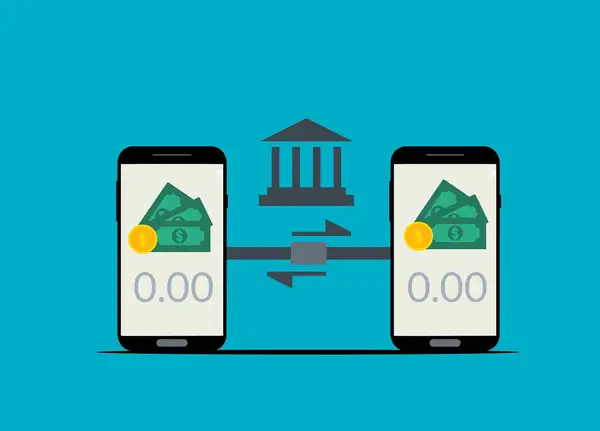
To buy USDT with STC Pay you open the P2P market on Binance or Bybit, filter sellers by "STC Pay", open an order, send the riyals from your own STC Pay wallet to the seller's wallet, and tap "Paid". The exchange has already locked the seller's USDT in escrowEscrowThe exchange holds the seller's coins during a P2P order and only releases them to you once the seller confirms your payment, or once an appeal is decided in your favour.; the moment the seller sees your transfer and releases, the USDT is yours. The whole thing takes a few minutes, and the only fee the exchange charges is Binance's flat 0.05 USDT per order.
That is the short version. The rest of this page is the long one: what STC Pay actually is today, whether it "allows" this, how the flow differs between Binance and Bybit, how to match names, what the premium over the peg costs you, and what to do when a seller goes quiet. The general mechanics of P2P (merchant badges, completion rates, appeals) live on our P2P hub; this page is only about the STC Pay rail.
What STC Pay is now: a wallet inside a bank
STC Pay started as a telecom-backed digital wallet. It now operates under stc bank, a bank licensed by Council of Ministers decision No. 671 of 22 June 2021 and supervised by the Saudi Central Bank (SAMA). That matters for two reasons. First, a wallet-to-wallet transfer is now a transfer between two accounts at a SAMA-supervised bank, so the money moves instantly and is as traceable as any bank transfer. Second, stc bank's compliance team is a bank compliance team: unusual activity gets reviewed the same way it would at Al Rajhi or SNB.
The app offers transfers to contacts and to local and international banks, an International Transfer product, group expense splitting, savings products and physical cards (Signature, mada, Platinum). Wallet limits depend on your verification tier; stc bank does not publish a tier table on the pages we checked, so open the app, go to your profile and read your own daily and monthly sending limits before you commit to a large order. If a seller's ad needs more than your tier allows, you simply cannot pay it, and the order will time out against you.
Does STC Pay allow crypto? The honest answer
Nobody has said. stc bank's published General Terms and Conditions contain no clause about cryptocurrency or virtual currencies, in either direction. No Saudi bank or payment provider offers crypto services, and the 2018 Standing Committee statement (SAMA, the CMA and other bodies) warned that virtual currencies are not approved and nobody is licensed to deal in them. Crypto is not prohibited for individuals, but it is unregulated and no platform holds a Saudi licence. Our legal page covers that in detail.
So when you see "STC Pay" as a payment option on a P2P ad, it is there because the seller listed it, not because stc bank endorsed it. Binance's officially announced SAR methods are urpay and Liv. KSA (added 29 April 2022); STC Pay, Al Rajhi, SNB and Alinma appear on ads according to community test reports. In practice STC Pay is the method you will see most, because almost every seller holds a wallet. Treat it as a transfer rail that happens to be fast, and behave accordingly: nothing in the note, amounts within your normal pattern, your own wallet only.
Buying USDT with STC Pay on Binance, step by step
- Finish Binance identity verification
Binance asks for a government ID and proof of address before P2P opens. Expats: read our Iqama KYC guide first. Enable two-factor authentication before you touch P2P.
- Add STC Pay as a payment method
Profile → Payment methods → Add → search "STC Pay". Enter the account name exactly as it appears in your STC Pay app and the mobile number the wallet is registered to. This is the name sellers will check against.
- Open P2P → Buy → USDT, fiat SAR, filter "STC Pay"
Sort by price, then look at each seller's completion rate and order count. A merchant with hundreds of orders and 98%+ completion is worth a few halalas more per USDT.
- Enter the amount in SAR and open the order
The seller's USDT moves into escrow and a payment timer starts (typically 15 minutes). The order page shows the seller's STC Pay number and registered name.
- Pay from your STC Pay app
Send to that number, the exact amount, from the wallet in your own name. Leave the note empty or neutral. Never type the exchange name, "USDT" or "crypto".
- Tap "Transferred, notify seller" and wait
Do not tap it before the money has actually left your wallet. The seller checks their balance and releases; the USDT lands in your Funding wallet.
- Move the USDT where you want it
Keep it on Binance to trade, or withdraw to your own wallet. For small sums TRC-20 is the cheapest network; our USDT guide compares them.
Binance's fee on this flow is a flat 0.05 USDT takerTakerThe side of a trade that fills an existing ad. On P2P, when you click Buy on a seller's ad, you are the taker. fee per order on USDT pairs in the SAR market, applied since 19 March 2024, regardless of order size. On a 1,000 SAR order that is a fraction of a riyal; on a 100 SAR order it is proportionally more, which is one reason to batch small purchases. Full details on the platform are in our Binance review.
Buying on Bybit: what changes
Bybit also runs a SAR P2P market where sellers list STC Pay, and the mechanics are the same escrow model. Two differences matter in practice. Bybit's P2P has been reported as charging takers nothing, so the only cost is the seller's premium. And Bybit's KYCKYCKnow your customer: the identity check an exchange runs before it lets you trade or withdraw. is reported to accept both the Saudi National ID and the Iqama with a selfie check, which some expats find simpler than Binance's proof-of-address step. The payment window and appeal flow are equivalent: open the order, pay from STC Pay, mark as paid, wait for release. Bybit also offers an Islamic Account for spot trading, certified by ZICO Shariah, which readers who care about halal trading may want; see the Bybit review. OKX runs a SAR market too, with STC Pay listed per the same reports.
Want USDT without a P2P chat at all?A Visa or Mastercard buy in USD settles in minutes on CEX.IO, with published card fee ranges of 0.49%–4.99% plus a service charge.
Get startedName match and the transfer note
Every rejected STC Pay P2P payment we have heard of comes down to one of two things: the name or the note. The name on your STC Pay wallet must match the name on your exchange profile, letter for letter in Latin script. Saudi names transliterate several ways (Mohammed, Mohammad, Muhammad; Abdulrahman, Abdul Rahman), and the exchange shows the seller the name you entered when adding the payment method. If your wallet says "ABDULRAHMAN AL-QAHTANI" and your Binance profile says "Abdul Rahman Alqahtani", a careful seller will refuse to release and open an appeal, and the appeal will go against you because you broke the rule that payments must come from an account in the buyer's own name. Fix this before your first order: edit the payment-method name to the exact spelling on your wallet.
The note (the optional message field on an STC Pay transfer) should be blank. If you must write something, write something neutral like a first name. Never write "USDT", "crypto", "Binance", "Bybit" or "P2P". Sellers say this plainly in their ad terms, and for good reason: a transfer labelled with a crypto reference invites questions from a compliance reviewer at a SAMA-supervised bank, for both of you. There is no public stc bank rule about this; it is simply how a note gets read.
What it actually costs: the premium over 3.75
The riyal has been pegged at 3.75 per US dollar since 1986, and USDT is designed to track the dollar, so the "fair" price of 1 USDT is 3.75 SAR. P2P sellers price above that. The gap is their premiumPremiumThe percentage a P2P seller's USDT price sits above the 3.75 SAR peg. It is the real cost of the route, since the exchange fee is tiny., and it is the real cost of buying with STC Pay. Secondary test reports describe a small premium during Saudi banking hours, usually well under 2%, widening in the evening and on weekends when fewer sellers are online. We have no live feed of it; use the calculator with the price you actually see in the ad.
P2P premium calculator
The riyal has been pegged at 3.75 per US dollar since 1986. Anything above that is the cost of the route, not of the coin.
Two habits lower the premium. Buy during working hours when the most merchants are active, and compare the top five ads rather than the first one, because the cheapest ad often has a high minimum. A 0.5% difference on 5,000 SAR is 25 SAR, which is more than Binance's taker fee on 500 orders.
If the seller does not release
Most orders release within minutes. When one does not, the order page is your friend. First, check that you really sent the exact amount to the exact number shown in the order, and that your STC Pay app shows the transfer as completed. Second, message the seller through the order chat (never through WhatsApp or Telegram, where there is no record). Third, when the payment window has run out, tap Appeal, attach a screenshot of the STC Pay transaction showing the reference number, the amount, the date and the recipient name, and describe what happened in two sentences. The exchange's dispute team can see the escrow, and with a valid payment proof the USDT is released to you.
Two things you must not do: do not cancel the order (cancelling returns the escrow to the seller while your riyals are already gone), and do not send a second payment because the seller claims the first "did not arrive". A completed STC Pay transfer arrived. If the seller pressures you, that pressure is itself a signal to appeal.
Selling USDT to receive STC Pay
The reverse flow is the quickest off-ramp in the Kingdom. On the Sell side you post an ad (or accept a buyer's ad) with STC Pay as the receiving method. The buyer opens an order, your USDT goes into escrow, the buyer sends riyals to your wallet, and you release only after you see the money in your STC Pay balance, not in a screenshot, not in a chat message, not in an SMS. Because the wallet is instant, waiting costs you nothing. Once released, the riyals are spendable immediately: pay a bill, send to a bank account, or withdraw at a mada ATM with the STC Pay card. Our selling guide compares this with bank withdrawal and OTC.
Keep selling volumes in line with your normal wallet activity. A wallet that suddenly receives dozens of inbound transfers from strangers looks like a business, and stc bank may ask what the business is. No Saudi account freeze for P2P is documented in the sources we use, but an AML review of unusual inbound transfers is a generic risk at any bank, and a smaller, regular pattern is the easiest way to stay below that threshold.
Scams specific to the STC Pay rail
- "Release first, I'll pay right after." Never. Escrow exists so that nobody has to trust anybody. A buyer asking you to release before paying is the scam itself.
- Fake payment screenshots. An edited STC Pay confirmation is trivial to make. Only your own app balance counts. Refresh it; do not take the chat's word for it.
- Third-party payments. A buyer paying from a friend's or relative's wallet, or asking you to pay a seller from someone else's STC Pay, is against every exchange's rules and is the pattern most associated with laundering stolen funds. Accounts on both sides get restricted. Own wallet, own name, every time.
- The stalling seller. Takes your payment, goes silent, hopes you cancel so the escrow returns to them. Answer: appeal, never cancel.
- The crypto-labelled note. Some scammers deliberately write "USDT purchase" in the note when paying you, to make your wallet look like a trading desk. You cannot control their note, but you can refuse to trade with them again and keep your own notes clean.
- Off-platform deals. "Better rate on WhatsApp" means no escrow, no appeal, no record. It is where most losses on this rail happen; see our scam guide.
One risk sentence to end on, because it belongs here: STC Pay makes the riyal side of a P2P trade fast and traceable, but the crypto side still sits on an exchange that holds no Saudi licence, with no recourse to SAMA or the CMA if something goes wrong there. Keep on the exchange only what you are about to trade, and move the rest to a wallet you control, protected by your own seed phraseSeed phraseThe 12 or 24 words that restore a self-custody wallet. Anyone who has them controls the funds; never type them into a website or chat.. For the bank-transfer and urpay alternatives, see bank transfer and AlinmaPay.
Frequently asked questions
Can I buy USDT with STC Pay in Saudi Arabia?
Yes, through SAR P2P markets on Binance, Bybit and OKX, where sellers list STC Pay as an accepted payment method. STC Pay itself publishes no position on crypto: its terms contain no clause on virtual currencies, and its appearance on P2P is reported by community test reports, not by stc bank. You pay the seller from your own STC Pay wallet; the exchange holds the USDT in escrow until the seller confirms.
Does STC Pay allow cryptocurrency payments?
There is no published yes or no. stc bank, which operates STC Pay, is supervised by the Saudi Central Bank, and SAMA-supervised institutions do not offer crypto services themselves. A wallet-to-wallet transfer between two individuals is an ordinary transfer; what you must never do is write anything crypto-related in the transfer note, because a reviewer who sees it has grounds to query the account.
How long does an STC Pay P2P purchase take?
The transfer between two STC Pay wallets is near-instant, so the limiting factor is the seller. Experienced merchants typically release within a few minutes of seeing the money; the exchange gives them a payment window of about 15 minutes and lets you open an appeal if nothing happens after you have paid.
What is the fee for buying USDT with STC Pay on Binance?
Binance charges a flat 0.05 USDT taker fee per order on USDT pairs in the SAR market (applied since 19 March 2024). STC Pay does not charge for a wallet-to-wallet transfer. The real cost is the seller's price above the 3.75 SAR peg, which secondary estimates put at a small premium, usually well under 2% during banking hours.
What if the seller does not release my USDT after I paid with STC Pay?
Do not cancel the order and do not pay again. Wait the payment window, then tap Appeal inside the order, upload your STC Pay transaction screenshot showing the reference number, amount and recipient name, and let the exchange's support team freeze and settle the escrow. Your USDT is locked in escrow the moment the order opens, so the seller cannot run off with it.
Can I sell USDT and receive riyals in STC Pay?
Yes. Post or accept a buy ad with STC Pay as your receiving method, wait until the money shows in your STC Pay balance (not just a screenshot), then release. Many Saudi residents use this as the fastest off-ramp because STC Pay money can be spent, sent to a bank account or withdrawn at a mada ATM straight away.
Do I need a Saudi bank account to use STC Pay for P2P?
No, which is exactly why expats and students like it. An STC Pay wallet opened with an Iqama or National ID is enough, provided the name on the wallet is spelled the same way as your name on the exchange. Check your wallet tier in the app, because the limits on what you can send per day depend on it.
Sources and references
- stc bank — official site (regulated by the Saudi Central Bank, Council of Ministers decision 671)
- stc bank — general terms and conditions (no crypto clause)
- Binance — P2P adds urpay and Liv. KSA as SAR payment methods (29 Apr 2022)
- Binance — flat 0.05 USDT taker fee on USDT pairs in selected fiat markets
- Binance Square — P2P safety guide (release only after funds arrive, keep records)
- Bybit — official site (SAR P2P market)
- Saudi Central Bank — Standing Committee warning on virtual currencies (2018)
- Mondaq / Zamakhchary & Co — crypto platforms and fiat rails in Saudi Arabia (Feb 2026)
Ready for your first coin?
Sign-up and the ID check take a few minutes. Then buy Bitcoin, USDT or Pi with a Visa or Mastercard, or with Apple Pay.
Global platform operating since 2013 · registered with FinCEN (US) and the FCA (UK). Check availability in your country before signing up.